Gumboro Disease: The Variant The Silent Enemy


Abstract:
It is frequently observed that poultry flocks fail to achieve breeding objectives, manifested in the inability to reach optimal production efficiency—whether in egg or meat production. This failure is attributed to several key factors, most notably:
Preventing the spread of diseases within poultry flocks is a paramount priority for breeders. The outbreak of diseases, particularly epizootic ones such as Avian Influenza (Bird Flu) or Newcastle Disease, results in high mortality rates and catastrophic economic losses. The containment of such diseases is only possible through the systematic and rigorous application of Biosecurity measures across all poultry facilities and their subsidiaries. These facilities include poultry farms, feed mills, slaughterhouses, processing and packaging plants, and various means of transport, as well as retail outlets and restaurants. These procedures must be maintained from the initial planning stages of farm preparation for chick reception until the final product reaches the consumer’s table.
Consequently, success in modern intensive poultry production requires the integration of three fundamental factors: balanced nutrition, optimal management, and the implementation of biosecurity protocols.
In the fields of Animal Science and Veterinary Medicine, Biosecurity is defined as a comprehensive set of scientific and practical programs and procedures aimed at protecting animals, industry personnel, and consumers from infectious diseases. Many animal diseases are transmissible to humans and vice versa; these are known as Zoonoses. Thus, biosecurity represents a reciprocal protection between humans and animals. It can also be described as a rigorous battle against pathogenic agents—which are often invisible—to eliminate them and prevent their transmission. In essence, biosecurity is a scientific mindset and an organized coexistence with intensive animal husbandry methods to ensure abundant, safe, and healthy end-products.
Major Sources of Pathogen Transmission:
Pathogenic agents, including bacteria, viruses, fungi, and both internal and external parasites, can be introduced to poultry flocks through numerous and complex pathways. However, the primary vectors of transmission are: Humans, Animals, Equipment, Vehicles, Waste, Environment, and finally, Feed and Water.
Essential Biosecurity Procedures:
The core pillars of biosecurity can be summarized under four main headings:
Full Article:
It is frequently observed that poultry flocks fail to achieve breeding objectives, manifested in the inability to reach optimal production efficiency—whether in egg or meat production—due to several factors, primarily the following three:
Preventing the spread of diseases within poultry flocks is a matter that demands the breeder’s utmost attention. The spread of diseases, especially epidemic ones such as Avian Influenza (Bird Flu) or Newcastle Disease, leads to high mortality rates and devastating losses. Preventing the transmission of such diseases is unattainable without the systematic and stringent application of Biosecurity measures across all poultry facilities and their components. These include farms, feed mills, slaughterhouses, sorting, cutting, and packaging plants, as well as various logistical means, retail shops, and restaurants. These procedures are continuous, starting from the planning phase of farm preparation to receive chicks, and extending until the final product reaches the consumer.
Therefore, success in modern intensive poultry production necessitates the provision of three integrated factors: balanced nutrition, optimal management, and the implementation of biosecurity measures, as illustrated in the following figure:

While numerous definitions of biosecurity exist, its general definition refers to the application of a set of procedures aimed at protecting a living organism from another organism that seeks to coexist with it forcibly, causing harm and occasionally leading to its destruction. The term Biosecurity is derived from the fusion of two words: the first is “Bio,” of Greek origin, meaning “life,” and the second is “security,” of Latin origin, meaning “protection” or “safety.”
In the fields of Animal Science and Veterinary Medicine, Biosecurity is defined as a comprehensive framework of scientific and practical programs and procedures designed to protect animals, personnel within the sector, and consumers of animal products from infectious diseases. Many animal diseases can be transmitted to humans and vice versa; these are known as Zoonoses. Consequently, biosecurity represents a reciprocal protection between humans and animals.
It can also be described as a rigorous battle against pathogenic agents—which are often invisible—to eliminate them and prevent their dissemination. In summary, biosecurity is a scientific mindset and an organized coexistence with intensive scientific methods of animal husbandry, ultimately aimed at obtaining abundant, safe, and healthy products.
The following figure illustrates the integrated biosecurity system within the poultry production cycle:

Pathogenic agents—including bacteria, viruses, fungi, as well as internal and external parasites—are transmitted to poultry flocks through numerous and complex pathways that are difficult to fully enumerate, resulting in various diseases. However, the primary vectors through which these agents are transmitted include: humans, animals, equipment, vehicles, waste, the environment, and finally, feed and water.
The following diagram illustrates the potential sources of pathogen transmission to poultry facilities:
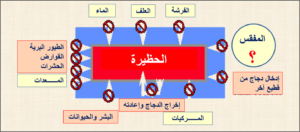
Humans can transmit numerous poultry diseases to farmed birds either directly, such as Salmonella, or indirectly, as is the case with most other pathogens. The highest risk is posed by individuals who maintain constant contact with birds, including farm owners, managers, and their families, as well as laborers, technicians, and drivers of vehicles transporting chickens, eggs, feed, and equipment. This also includes intermittent visitors to farms and associated facilities, such as vaccination and beak-trimming crews, and veterinarians conducting field visits to farms, hatcheries, and slaughterhouses. All such personnel must change their clothing and footwear upon entering the facility; these garments—especially footwear—must be clean and disinfected. Dedicated footbaths for disinfecting facility-specific footwear must be positioned at every entrance within the site. In essence, all individuals must strictly adhere to biosecurity protocols in accordance with the site’s established system.
Animals, particularly birds—including infected poultry themselves—are among the most hazardous vectors for transmitting diseases to healthy flocks. Wild birds, such as migratory ducks and geese, may carry Avian Influenza; while the virus may cause only mild symptoms in these wild waterfowl, it is highly virulent in domestic poultry, chickens, and turkeys, leading to massive losses. Live bird markets are also significant sources of disease transmission, as various bird species intermingle with commercial poultry.
Furthermore, earthworms transmit the eggs of cecal worms (Heterakis) to poultry. Insects such as mosquitoes transmit Avian Pox, while avian ticks carry Pasteurella bacteria. Litter beetles act as vectors for Newcastle Disease viruses, Salmonella, Escherichia coli, and other pathogens.
Rodents, such as mice and rats, transmit a wide array of pathogens to poultry flocks, including Salmonella, Pasteurella, and Yersinia. For instance, a single rat excretes approximately 100 fecal droppings per day; a single dropping may contain up to 230,000 units of Salmonella enteritidis, a primary cause of human food poisoning often linked to the consumption of raw or undercooked contaminated eggs. Even after the cleaning and disinfection of barns and equipment, Salmonella bacteria can remain viable for over 10 months. Cats should not be used in poultry houses for rodent control, as they can also serve as disease reservoirs and vectors. Ensuring that facilities are tightly sealed—without openings or crevices for wild birds and rodents to enter—alongside the strategic use of baits and insecticides, helps mitigate the risks these pests pose to bird health, personnel, and ultimately, the consumer.
All equipment used in poultry facilities is subject to contamination, particularly in farms and hatcheries, whether originating from outside or inside the sites. The most critical items include feeders and drinkers, as well as specialized equipment brought in for vaccination or beak trimming, and tools used for maintenance. All such equipment must be thoroughly cleaned and disinfected, especially egg trays and crates moving between barns and hatcheries. This equipment is typically cleaned before entry using pressurized water and foaming (detergent) agents, followed by disinfection with multi-purpose disinfectants.
Special attention must be given to drinking systems, whether nipple systems, manual drinkers, or automatic bell drinkers. Accumulated limescale deposits should be removed using diluted mineral acids, such as Hydrochloric Acid (HCl). The cleaning and disinfection of both internal and external water tanks require meticulous care. A biofilm (slime layer) often forms within the drinking water network due to fungal growth; oxidizing compounds, such as Hydrogen Peroxide (H2O2), can be utilized to eliminate these layers.
Most poultry diseases are transmitted as mechanical carriers via vehicles. Therefore, vehicle movement must be minimized—not only between different poultry facilities but also within each individual site. Each site must be equipped with cleaning and disinfection units, rendering the washing and disinfection of vehicles mandatory upon entry. It is essential that the disinfectant remains in contact with the vehicle for at least 10 minutes before rinsing with clean water. Wheel dips, through which vehicles pass to enter the facility, must have their disinfectant solution replaced every 7 days. Any driver entering the site is required to change into clean, disinfected clothing; single-use disposable garments are preferred.
Litter is one of the most significant waste products remaining in poultry houses following the conclusion of the production cycle and flock marketing. Its residues, once removed, can serve as sources for transmitting infection to healthy birds. Therefore, litter must be disposed of appropriately, such as through landfilling or cost-effective incineration to be utilized as an energy source or fertilizer. Regardless of the method, the collection or utilization site must be located at least 1.5 km away from any poultry facility. Heaps should be covered with plastic sheeting to prevent wind dispersal. Residues can be eliminated using sweeping and suction techniques.
Regarding spoiled or broken eggs where fluids have leaked, disposal is carried out via landfilling in a location relatively distant from the facilities, or via incineration in specialized on-site incinerators. These two methods are also used for the disposal of carcasses (dead birds). Furthermore, if the number of carcasses is large, they can be treated through fermentation and decomposition. Similarly, hatchery waste (egg residues after hatching) is treated using the aforementioned methods (landfilling or incineration), with the additional possibility of using it as a source of calcium and protein in animal feed after being thermally treated, disinfected, dried, and specially ground. As for personnel waste (trash), it is either landfilled, incinerated, or placed in designated containers provided by local authorities in areas far from the facilities.
To prevent the growth and proliferation of pathogens in poultry facilities, it is vital to maintain strict control over temperature, humidity, and ventilation, and to prevent the formation and spread of harmful gases. For instance, poultry litter used in floor-rearing systems is a primary source of high humidity within the barn, which facilitates litter fermentation and creates an environment conducive to bacterial growth. Consequently, litter moisture must be managed by adjusting drinkers to prevent leakage and ensuring well-ventilated barns, especially during winter.
Control must be exercised not only over the quantity of air entering the facility but also its quality regarding composition, concentrations of harmful gases, and dust, which may carry and spread various pathogens. It is advisable to equip air intakes—particularly in hatcheries and slaughterhouses—with specialized filters to purify the air from suspended impurities. Air can also be disinfected using pressurized sprays (fogging) containing chemical or organic disinfectants. Additionally, it is essential to prevent the emission of harmful gases, such as Carbon Dioxide ($CO_2$), Carbon Monoxide ($CO$), and Ammonia ($NH_3$), particularly in barns and hatcheries.
Feed serves as a potential carrier for pathogens, specifically bacteria and fungi. Salmonella is among the most common contaminants transmitted to birds through feed. Moreover, damp feed leads to fungal growth, such as Aspergillus, which causes Pneumonia. Fungal toxins (Mycotoxins), such as Aflatoxins and Ochratoxins, cause internal hemorrhaging and act as growth and immune suppressants. Therefore, all necessary precautions must be taken to prevent contamination during manufacturing in mills, transport to farms, and handling within barns. Feed can be thermally disinfected during the pelleting process using steam, followed by drying. Feed can also be protected from fungi by adding antifungal agents and toxin binders.
Clean water, free from organic and mineral contaminants, is critical for healthy poultry production. It is a major vector for disease transmission in the production chain. Therefore, water specifications must comply with those applied to sanitary drinking water. If the water does not meet ideal specifications, it can be treated through filtration and the addition of disinfectants, such as chlorine compounds. However, during outbreaks, disinfection with Hydrogen Peroxide ($H_2O_2$) is preferred.
It is evident from the above that the pathways and means leading to pathogenic contamination are numerous and complex. Thus, it is imperative to study and understand the mechanisms of infection transmission into poultry facilities and its spread—whether vertically, horizontally, or both—within poultry flocks and products, and subsequently to humans and vice versa.
The core pillars of biosecurity can be summarized under four main headings:
In poultry husbandry, isolation refers to the implementation of practical measures aimed at protecting poultry and their products from direct contact with pathogens. Isolation measures are classified into two groups: Exterior Isolation and Interior Isolation.
Exterior isolation is achieved by selecting appropriate sites for constructing facilities, particularly farms and hatcheries. The key practical measures for ensuring exterior isolation are:
Interior isolation, particularly in farms and hatcheries, refers to the set of measures taken within the facility to protect birds and products from contact with potential pathogen carriers. Everything entering these facilities must be monitored, cleaned, and disinfected, or otherwise prohibited. For example, food for worker consumption may be allowed after inspection and must be consumed in designated areas, but it is strictly forbidden inside the barns. Simply put, general cleanliness within any poultry facility is the first step in any applied biosecurity program. General cleanliness is a personal and educational behavior before it is a technical or mandatory procedure.
Interior isolation for any poultry site begins from the moment persons, vehicles, or any other items enter the site, which must—as previously mentioned—be isolated from the surrounding external environment.
The following figure provides a schematic of a single site containing two spaced poultry houses and the method of isolating them from the external environment:

The classification of zones, routes, and paths taken by personnel within a site—based on the degree of potential contamination—is a fundamental procedure in the implementation of biosecurity. For instance, zones within a Great Grandparent (GGP) or Parent Stock (PS) poultry breeding site are divided into three distinct areas:
The following figure illustrates the distribution of these zones, their coding via clothing and footwear colors corresponding to the potential contamination levels, and the designated pathways within these areas:

The following is the formal and scientific translation of the technical protocols described:
The replacement of color-coded clothing and footwear—corresponding to the established zonal classification—must be performed prior to transitioning from one zone to another. Clothing and footwear are changed in designated changing rooms/showers; one is located within the site’s biosecurity unit at the main entrance, and another is situated at the entrance to the poultry house.
Prior to entering the site, poultry house, hatchery, or slaughterhouse, hands must be washed with soap and water or a specialized disinfecting gel containing an effective antimicrobial agent. Furthermore, footbaths containing appropriate disinfectants for footwear, such as phenolic or chlorine-based compounds, must be positioned at every doorway.
The following images illustrate a hand sanitizer dispenser and footbaths positioned at the entrance points:

يبين In poultry Great Grandparent (GGP) and Parent Stock (PS) facilities, it is preferred that

personnel—upon entering the site and after showering and changing clothes—undergo a precautionary quarantine period of 48–72 hours within the site’s biosecurity building before entering the poultry houses.
The following diagram illustrates the distribution of zones within the poultry facility according to the potential degree of contamination:

The following diagram illustrates some details of the Biosecurity Building at the poultry facility, where full showering, changing of clothes and footwear, and the cleaning and disinfection of personal belongings take place:

It must be emphasized that the biosecurity building, whether at the site entrance or the specific poultry facility, must be fully equipped with all cleaning and disinfection utilities. This includes Ultraviolet (UV) radiation sterilization units, specifically designed for disinfecting personal items such as mobile communication devices, pens, and documents. It should be noted that UV radiation does not penetrate materials; its effect is limited to surface sterilization and is classified as a dry disinfection method.
The systematic cleaning and disinfection of sites, barns, and equipment using various methods and chemical compounds are core operational processes within biosecurity programs. Using a poultry farm as an example, these operations are summarized as follows:
Various disinfectants are extensively used in poultry facilities to eliminate the maximum number of pathogens. However, the indiscriminate use of these chemical compounds outside of an integrated biosecurity system may be ineffective from both a sanitary and economic perspective.
Selection criteria for disinfectants include:
Vaccination (also referred to as immunization) is defined as the administration of a vaccine—a preparation manufactured from pathogens that may be inactivated (dead) or live-attenuated. The goal is to stimulate the immune system to repel the disease caused by these agents by inducing the production of specific antibodies. Vaccines are highly specific to the disease and its causative agent (bacterial, viral, or parasitic). For example, a vaccine designed for Fowl Pox protects chickens only against that specific disease.
Current research in global universities and scientific centers is focused on developing polyvalent vaccines, which protect against multiple diseases through a single dose administered via a single route. Thus, vaccination is an integral component of the biosecurity system to assist in protecting flocks from various diseases.
Some references consider the administration of medications, particularly preventive ones, as an element of biosecurity. However, since most of these medications belong to the antibiotic group, their use has been banned in many countries worldwide—both for prevention and as growth promoters. This is due to the development of antimicrobial resistance in pathogens over time, which affects both animals and humans who consume animal products containing drug residues. Consequently, the use of antibiotics remains strictly limited to the treatment of active infections.