Vaccination Audit in Laying Hens

Vaccination Audit in Laying Hens

Vaccination is a veterinary medical procedure with major sanitary, economic, and zootechnical implications. Even when performed by field operators, it remains under the responsibility of the veterinary practitioner, who determines its indication, validates the practical procedures, and monitors the quality of execution.

In laying hens and future laying pullets, the objective of a vaccination audit is to secure the entire operational chain: vaccine storage, organization of the vaccination process, preparation of equipment, reconstitution of solutions, team allocation, technical execution, waste disposal, and documentation traceability.

A rigorous audit helps identify deviations that may compromise flock immunization: wrong vaccine selection, incorrect dilution, temperature failure, poor water quality, inappropriate vaccination technique, poor restraint, missed birds, or incomplete post-vaccination control. Success therefore depends not only on the vaccine itself, but on the overall control of the entire process.

Cross-cutting points to verify during an audit include vaccine stock management, batch compliance, respect of the cold chain, operator competence, cleanliness and maintenance of equipment, diluent quality, recording of timing, allocation of responsibilities, control of vaccine uptake, and archiving of field observations.


A- Vaccination via Drinking Water

This route is mainly used in future laying pullets, particularly for certain live vaccines such as Gumboro and, less commonly, avian encephalomyelitis. Its main advantage lies in the ability to vaccinate a large number of birds rapidly, provided that water effectively serves as a carrier without altering the vaccine virus.

  • Water quality is the first determinant of success. Before use, it is essential to verify the absence of residual chlorine, excessive minerals, disinfectants, or any other factors likely to inactivate the vaccine. A water analysis, ideally performed before the birds enter the house, allows necessary corrections to be anticipated. The use of a chlorine neutralizer or tracer dye must be justified and consistent with the protocol recommendations.
  • Preparation of the vaccination process must follow a strict sequence. Nipple lines or drinking circuits should be emptied to remove residual water. Pre-vaccination water deprivation must be sufficient to stimulate homogeneous intake without causing excessive stress or marked competition between birds. The optimal duration depends on age, ambient temperature, stocking density, and the birds’ familiarity with the drinking system.
  • The vaccine solution should be prepared immediately before use, with clean equipment, accurate dilution, and distribution adapted to the number of birds. Vials must be handled according to the manufacturer’s instructions, avoiding any practice that may alter pH or introduce contaminants. In large flocks, preparation in several fractions may improve vaccine stability and reduce the time between reconstitution and administration.
  • During distribution, the arrival of the vaccine solution in the lines must be monitored up to the furthest points. Lowering the lines, opening and closing the line ends, and progressively returning to normal drinking water should all be carefully coordinated. Post-vaccination control relies on checking visual markers such as tongue or crop coloration when this is part of the procedure.

The most common causes of failure are well known: poorly stored or frozen vaccine, wrong dose, expired vaccine, product confusion, failure to neutralize chlorine, excessive or insufficient water volume, residual water remaining in the system, water deprivation that is too short or too long, excessive stocking density, poor team coordination, and poor flock health status.

Priority audit points:

  • Systematically assess the physicochemical and microbiological quality of the water before the vaccination process.
  • Adapt the duration of water deprivation to the age of the birds and the farm conditions.
  • Prepare the vaccine immediately before use and minimize the time between reconstitution and administration.
  • Ensure that the entire vaccine solution reaches all lines and all birds.
  • Document times, water volumes, vaccine references, and any anomalies observed.


B- Eye-Drop Vaccination

Eye-drop vaccination is a reference technique for several respiratory diseases, particularly infectious laryngotracheitis (ILT). Its strategic value lies in the fact that it best reproduces the natural route of infection through the conjunctiva, thereby promoting targeted and homogeneous vaccine uptake.

In the case of ILT, this technique helps avoid the limitations associated with other routes, especially drinking water or certain spray administrations, whose efficacy on the target mucosal surfaces may be inconsistent. Poor vaccine coverage leaves susceptible birds within the flock and favors circulation of the vaccine virus among insufficiently immunized animals.

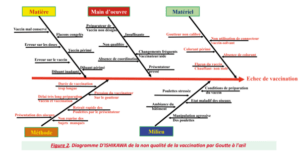
The apparent simplicity of eye-drop administration should not obscure its technical demands. The choice of diluent, storage temperature, proper reconstitution, and correct use of the dropper directly determine the success of the operation.

  • Drops must be calibrated and administered without traumatizing the eye or contaminating the equipment.
  • The operator must hold the device consistently to obtain regular drops, apply the drop in the correct location, and wait for complete absorption before releasing the bird.
  • Excessive speed, premature release, or poor restraint quickly lead to inadequate vaccine uptake. Overheating of the vaccine solution, especially during prolonged sessions, must also be avoided.
  • Quality control can be ensured through regular field checks, including the use of a dye when permitted by the protocol.
  • It is also essential to remove and dispose of vials, droppers, and residual vaccine immediately after the vaccination process, particularly for ILT vaccines, in order to avoid any uncontrolled spread of vaccine virus.

Common deviations include incompatible diluent use, storage errors, irregular drop size, failure to wait for absorption, team fatigue, vaccine warming, and insufficient uptake control.
Priority audit points:

  • Reserve this route for situations where individual and homogeneous immunization is essential.
  • Train operators in the exact technique and proper handling of the dropper.
  • Preserve the thermal stability of the vaccine throughout the process.
  • Regularly verify the quality of vaccine uptake on a sample of birds.
  • Immediately dispose of any contaminated material after vaccination.

C- Wing-Web Vaccination

Wing-web vaccination is used mainly against fowl pox, often in association with avian encephalomyelitis, and may also be applied in breeders for certain specific indications. This technique requires excellent process organization because the expected success rate must be very high.

Three factors explain this requirement:

  1. the need to achieve vaccine coverage above 98%,
  2. the importance of correct bird presentation by assistants,
  3. and the often high cost of vaccines administered by this route.

The audit must therefore focus as much on the quality of the technique as on the efficiency of the collective organization.

Preparation begins with verifying compatibility between the vaccine and the diluent, followed by careful reconstitution and rational distribution of the vaccine volume among operators. This reduces vaccine warming and limits interruptions. Equipment must be inspected before starting: wing-web needles must be clean, functional, and not deformed, and automatic applicators must be perfectly tight when used.


  • Bird restraint must allow clear access to the wing-web membrane.
  • It is recommended to work on a stable surface, with standardized presentation of birds, ideally in small groups, in order to avoid double vaccination, missed birds, and inaccurate technique.
  • The operator may sometimes need to remove a few feathers if they prevent proper contact between the needle and the skin.
  • The inoculation must be performed in the appropriate anatomical area, avoiding bony structures and peripheral zones.
  • Quality control is then required, notably through reading the vaccination “take” within the recommended timeframe. As with other techniques, assigning each operator to specific rows facilitates performance analysis and detection of potential deviations.

Priority audit points:

  • Standardize bird presentation to reduce missed birds and double inoculations.
  • Check needle condition and equipment tightness before use.
  • Distribute the vaccine among several operators to preserve stability.
  • Trace the rows or areas assigned to each team to facilitate auditing.
  • Verify vaccine takes within the required timeframe after administration.

D- Intramuscular Vaccination

The intramuscular route is reserved for inactivated vaccines, most often oil-based. It is of major importance because, unlike live vaccines, these products do not multiply in the body; therefore, any injection failure is equivalent to an absence of effective protection for the bird concerned.

Inactivated vaccines have a complex formulation combining antigen, aqueous phase, and oil adjuvant. Their homogeneity is a critical point. Inadequate storage, especially freezing, may irreversibly alter the structure of the emulsion and reduce immune efficacy.

  • Before use, the vaccine must be brought to the recommended temperature to improve fluidity and ensure homogeneous composition throughout the process.
  • The audit must cover the cold chain, warming before use, product mixing, the quality of syringes or automatic injectors, the actual delivered volume, and the exact injection site.
  • Large-scale operations are particularly exposed to reduced technical precision due to work pace, fatigue, and the mechanical resistance of oil-based solutions when passing through the equipment.

This technique also involves occupational risks. Accidental self-injection into fingers is a known and sometimes serious incident, justifying specific training, strict safety procedures, and the availability of a clear response protocol. From the animal perspective, a poorly positioned injection may lead to sequestration of the vaccine in the muscle, inadequate diffusion, or local lesions detrimental to both efficacy and welfare.

Frequently encountered errors include improper storage, vaccine freezing, emulsion heterogeneity, incorrect volume adjustment, inappropriate needle selection, inadequate restraint, and failure to respect the correct anatomical injection site. Detailed audit sheets are particularly useful to break down each step and objectively identify non-conformities.

Priority audit points:

  • Verify emulsion integrity and reject any vaccine that has been frozen.
  • Bring the product to the recommended temperature before starting the process.
  • Calibrate the injected volume and regularly check proper equipment function.
  • Train operators in safety procedures to prevent accidental self-injection.
  • Audit the precision of the gesture in the field, not only documentary compliance.

E- Subcutaneous Vaccination

Subcutaneous injection is an alternative to the intramuscular route, particularly in young birds with insufficient muscle mass, but also in certain situations involving older birds. It allows administration of various injectable vaccines while limiting some of the constraints associated with the muscular site.

The injection site must be strictly respected: the posterior part of the neck, at the middle third, by lifting the skin between the thumb and index finger. This maneuver creates a suitable subcutaneous space and allows proper perception of product delivery. Poor localization may result in intradermal injection, accidental intramuscular delivery, or product reflux.

  • As with the intramuscular route, vaccine storage, emulsion homogeneity, work pace, equipment quality, and operator competence remain decisive factors. Excessive speed increases the risk of error, particularly when restraint is inadequate or the skin fold is not properly formed.
  • The audit should also investigate incorrect injected volume, leakage at the injection site, abnormal local reactions, missed birds, and traceability issues. In large flocks, this route can be properly mastered provided the technique is standardized, bird flow is organized, and quality control is maintained throughout the process.
  • In practice, the constraints encountered are close to those described for other injection routes: inadequate storage, poorly adjusted equipment, inadequate restraint, team fatigue, lack of veterinary supervision, and incomplete documentation.

Final quality depends less on the route chosen than on the discipline applied at each

Priority audit points:

  • Precisely locate the injection point at the posterior middle third of the neck.
  • Train operators to correctly create the skin fold before inoculation.
  • Monitor leakage and local reactions during and after the process.
  • Apply the same requirements for storage and traceability as for the IM route.
  • Implement continuous quality control on a representative sample of birds.

Conclusion

A vaccination audit in laying-hen production should not be regarded as a mere control formality, but as a tool for sanitary management and performance improvement. It transforms a set of sometimes empirical practices into a standardized, measurable, and improvable procedure.

Whatever the administration route, the same principles apply: product quality, proper storage conditions, rigorous preparation, clear organization of the process, operator competence, veterinary supervision, real-time quality control, and complete traceability. Prevention of vaccination failure therefore depends first and foremost on the quality of execution.

Article Reference :

Tags :
Share This :

Request an Appointment